The Shadow of the Wind
The Shadow of the WindThe Shadow of the Wind, by Julián Carax, is at once the novel Daniel Sempere adopts from the Cemetery of Forgotten Books and the surviving link between a reader, a vanished author, and the histories others tried to erase. Daniel’s attachment begins in childhood with a night of reading; years later, the book’s rarity makes it a target, and its presence among the evidence of a supposed death helps conceal who actually died. The book survives its author’s attempt to destroy his work, carrying a story that becomes inseparable from the search for Carax himself.
The Adopted Book and Its First Reader
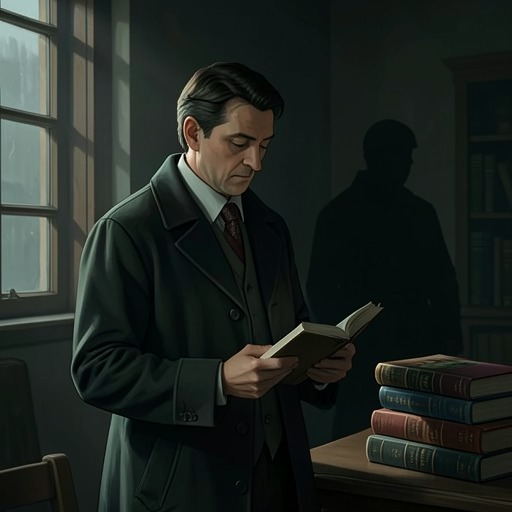
Among the thousands of volumes in the Cemetery of Forgotten Books, the novel stands out to Daniel by its wine-coloured leather binding and gold-lettered title. He has never heard of either the book or its author, but chooses it with care and carries it away. The decision feels to him as though the book had been waiting there for years, even before his birth. That sense of prior connection gives the encounter its lasting force: the book is not simply selected from a collection but seems to have found its reader.
Back in the apartment on Calle Santa Ana, Daniel shuts himself away to read. The plot he encounters follows a man searching for the father he never knew, a quest revealed by his mother on her deathbed. The search becomes a ghostly odyssey through lost youth and a cursed love. Daniel also notices the novel’s multiplying structure: one story opens into others like Russian dolls, then fractures into reflections in a gallery of mirrors. He reads from the first lines until dawn, absorbed enough to resist closing his eyes because he does not want to leave the characters behind.
The experience becomes Daniel’s measure of what a first book can do. He recalls a customer at his father’s bookshop saying that the first book to reach a reader’s heart leaves an unusually deep mark: its images and words help shape a private memory to which the reader returns. Daniel locates that formative book in the passages of the Cemetery of Forgotten Books. Much later, after decades of reading, he still calls Carax’s novel his favourite.
A Book Pursued and Protected
The book’s hold on Daniel becomes visible to others. Gustavo Barceló knows that Daniel has it and treats it as an object whose price is the only matter worth discussing. Daniel’s refusal to sell it sets him apart from those who treat rare books as possessions or commodities. The distinction matters to Carax as well: learning that a boy has found the novel, refuses every offer, and tries to rescue its author from obscurity awakens sympathy and respect in him. Carax secretly observes Daniel, making the boy’s devotion a point of connection between the author and the reader before they meet openly.
The novel is also endangered by that devotion. During a storm at Barceló’s residence, Daniel goes to the library intending to take the copy from its glass cabinet and give it to the faceless pursuer, hoping to be free of him and leave Clara Barceló’s life. Holding the book against his chest, he experiences the intended betrayal as a personal one. His plan is interrupted before he can carry it through. The episode makes clear that the book is not interchangeable property: even when Daniel considers surrendering it, his attachment pulls against the act.
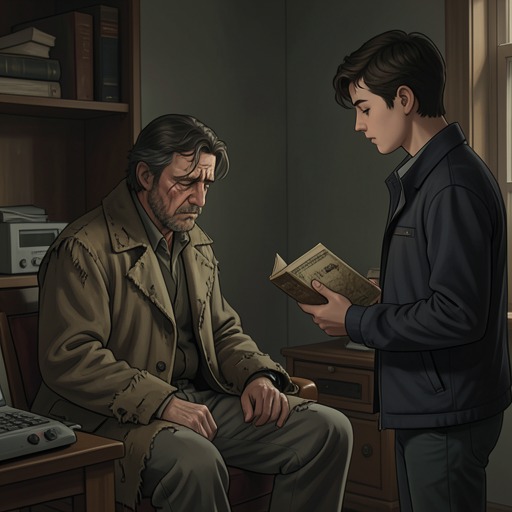
At a later meeting with Fernando Ramos, Daniel explains that he came across a book by Carax, believed to have disappeared, and has since tried to learn about its author and clarify the circumstances of his death. The title he names is The Shadow of the Wind. Ramos has read Carax’s novels, but says that someone entered his room years earlier and set them on fire. Daniel and Fermín Romero de Torres tell him that Fumero was not the person responsible; they identify the likely destroyer as a burn-disfigured man who calls himself Laín Coubert. The book’s survival is therefore exceptional: it belongs to a body of work that has been deliberately hunted and burned.
The Novel as Evidence and Misleading Record
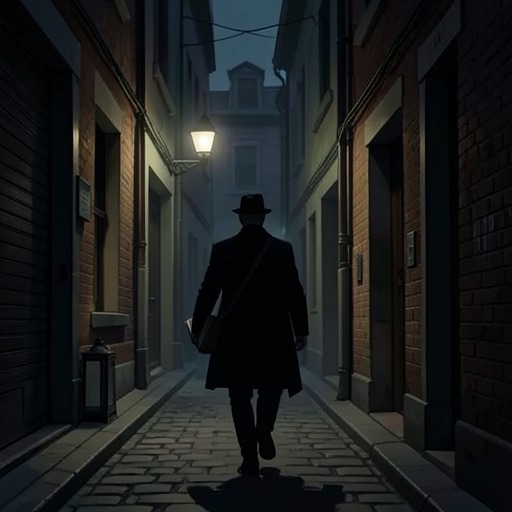
The connection between the book and the mystery becomes stark in the account of the body brought to the morgue in September 1936. The police claimed that a man had been found in an alley in the Raval quarter; the body arrived with a book and a passport identifying the deceased as Julián Fortuny Carax, born in Barcelona in 1900. The passport showed entry into Spain a month earlier, and the reported cause of death was a gunshot wound. The book is one of the few items found with the body, making it part of the evidence by which officials attach an identity to the dead man.
That identification is false. Miquel Moliner had given Julián his passport, placing it beside the copy of The Shadow of the Wind he had carried in his coat. After Miquel is killed, his papers are absent; the morgue can find only a damaged passport in Carax’s name and the novel. The police consequently register Miquel’s body as Julián Carax. Fumero recognizes Miquel but confirms the false identification and orders the body sent to a common grave in Montjuïc. The book’s presence helps make the deception plausible, while the missing personal papers and manipulated official record allow Carax to disappear under the identity of a dead man.
The book’s role in this chain is sharply different from its role for Daniel. To him, it is a story that has entered his memory and a work worth protecting; to the authorities, it is an item accompanying a body; to those trying to destroy Carax’s legacy, it is one more copy to locate. In the wartime confusion, the evidence does not preserve the truth by itself. Its meaning depends on who keeps it, what other documents survive, and who has power to make an official account stick.
Survival, Recovery, and the Closing Frame
Carax eventually tells Daniel that another copy of the novel remains in Barcelona. He had destroyed the others, but someone more clever than he had hidden one where he would never find it: Daniel’s copy. The revelation reverses the book’s earlier apparent vulnerability. Carax’s attempt to erase his work has failed because a reader preserved the very volume he could not recover. Daniel’s refusal to sell it, initially known through booksellers’ talk, has made the copy a refuge from the author’s own destruction of his past.
The book’s material presence also binds Carax and Miquel in their final parting. Miquel has carried a copy in his coat since the day he received it; before they separate, Carax hands him his passport, and Miquel places it beside the novel. The pairing anticipates the later confusion between their identities: passport and book will be found with Miquel’s body and contribute to the official conclusion that he is Carax. A gift between friends becomes part of the mechanism by which one man’s death conceals another man’s survival.
In the novel’s closing coda, Daniel looks back from the bookshop he runs with Bea Aguilar and identifies Carax’s novel as his enduring favourite. His son, Julian, watches him writing at the counter, while Daniel’s father remains upstairs and the family’s life continues around the shop. The novel’s significance is thus not confined to the mystery it helps resolve: it is also the first book that shaped Daniel’s memory, a work preserved through a reader’s care, and a story whose survival passes into the next generation. Its journey from a forgotten shelf to a private library, a false death record, and Daniel’s lasting recollection makes the act of reading itself a form of preservation.